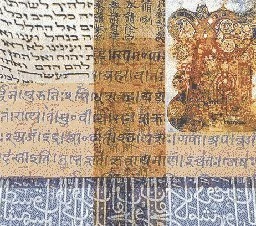
Books of Kings
Biblical books mixing history and theology to explain Judah's fall.

The Books of Kings (1–2 Kings) are books in the Hebrew Bible and the Old Testament of the Christian Bible.
- field
- Biblical history and theology
- composition
- First edition late 7th century BC; second edition mid-6th century BC
Lore & Background
The Books of Kings are divided into two parts: 1 Kings and 2 Kings. The Jerusalem Bible divides them into eight sections: the Davidic succession, Solomon in all his glory, the political and religious schism, the two kingdoms until Elijah, the Elijah cycle, the Elisha cycle, the two kingdoms to the fall of Samaria, and the last years of the kingdom of Judah. The narrative begins with David's old age and the succession of Solomon, including the anointing of Solomon by Zadok and the execution of Adonijah and Joab.
Reader's Guide
The Books of Kings are significant as a key source for the history of ancient Israel and Judah, though biblical commentators believe they mix legends, folktales, miracle stories, and fictional constructions with annals. Their primary purpose is theological: to explain why the Kingdom of Judah was destroyed by Babylon in c. Despite these elements, scholars consider the books largely reliable for determining historical events. The books are thought to have a first edition from the late 7th century BC and a second, final edition from the mid-6th century BC. Their legacy lies in shaping Jewish and Christian understanding of Israel's covenant relationship with God, the consequences of idolatry, and the role of prophecy. The narrative structure, from David's death to Jehoiachin's release, frames the history as a moral and theological lesson, influencing later biblical interpretation and Western religious thought.
Did You Know?
- The Books of Kings conclude the Deuteronomistic history, which also includes Joshua, Judges, and Samuel.
- Scholars tend to treat the books as consisting of a first edition from the late 7th century BC and a second and final edition from the mid-6th century BC.
- The Jerusalem Bible divides the two Books of Kings into eight sections, including the Davidic succession and the Elijah and Elisha cycles.
The Meaning and Evolution of 'Canon'
The term canon traces its roots to the Greek word kanōn, which originally signified a rule or measuring stick. By the fourteenth century, this linguistic heritage had shifted to describe the specific collection of sacred texts that a Christian community recognized as genuine and divinely inspired. The formation of any such list was never a single, decisive act; rather, it emerged gradually through prolonged debate and eventual consensus among religious authorities within each faith tradition. Not every ancient text survived this filtering process. Some writings, including certain Jewish-Christian gospels, were excluded entirely, while others occupied a contested middle ground—regarded as apocryphal or deuterocanonical by some denominations yet treated as fully authoritative scripture by others. Even among communities that share a largely overlapping manuscript tradition, the Hebrew Bible and the Christian Old Testament diverge in their precise boundaries. A few Christian groups go further still, maintaining what is sometimes called an open canon, in which additional holy texts are honored as scripture without being formally incorporated into the standard biblical collection.
The Jewish Tanakh and the Long Road to Canonization
Rabbinic Judaism recognizes twenty-four sacred books organized into three distinct divisions: the five books of the Torah, the eight books of the Prophets, and the eleven books of the Writings. Scholars generally place the process of fixing this collection between 200 BC and 200 AD, with a widely cited but increasingly questioned timeline suggesting the Torah was settled around 400 BC, the Prophets around 200 BC, and the Writings perhaps as late as 100 AD, possibly at a hypothetical Council of Jamnia. The scholar Marc Zvi Brettler has argued that outside the Torah and Prophets, the Jewish scriptures remained fluid for a long period, with different communities granting authority to different books. The text of Deuteronomy itself contains a prohibition against adding to or subtracting from the instruction, which some read as a safeguard against later scribal alteration. Historical references point to Nehemiah assembling a library of royal, prophetic, and Davidic writings, while both Maccabean books describe Judas Maccabeus gathering sacred scrolls. Some scholars even attribute the final fixing of the canon to the Hasmonean dynasty, which ruled from 140 to 37 BC.
The Samaritan Pentateuch and a Rival Sacred Tradition
The Samaritans, whose distinct identity crystallized after the Assyrian conquest of Samaria in 722 BC, preserve their own version of the Torah written in the Samaritan alphabet. Their text diverges from the Masoretic tradition in ways ranging from minor genealogical age differences to substantial theological shifts: a commandment mandating monogamy appears only in their version, and most critically, they locate the reception of the Ten Commandments and the proper site of sacrifice on Mount Gerizim rather than Mount Sinai or Jerusalem. Despite these differences, modern scholars routinely consult the Samaritan Pentateuch when reconstructing the original meaning of the Pentateuch and tracing how text-families evolved over time; some Dead Sea Scrolls have even been identified as belonging to a proto-Samaritan textual tradition. The Samaritan community accepts the Torah alone as inspired scripture, rejecting every other biblical book—a stance that may mirror the ancient Sadducees. The small surviving community in Nablus, an area linked to ancient Shechem, claims to possess the oldest extant copy of the Torah, one they believe was handwritten by Abisha, a grandson of Aaron, and they regard themselves as the true guardians of the Law.
The Christian Canon: Structure, Councils, and Denominational Boundaries
The Christian Bible is divided into two major sections. The Old Testament, drawn from the Hebrew Bible, is divided into thirty-nine books in Protestant Bibles or forty-six in Catholic Bibles, the latter including deuterocanonical works. The New Testament, nearly universal across Christian traditions, comprises twenty-seven books: the four canonical gospels, the Acts of the Apostles, twenty-one epistles or letters, and the Book of Revelation. The Septuagint, a Koine Greek translation that closely mirrors the Hebrew Bible while adding extra texts, continues to serve as the Old Testament in certain liturgical settings. The Catholic Church formalized its seventy-three-book canon at the Council of Trent between 1545 and 1563, though earlier regional assemblies—the Council of Rome in 382, the Synod of Hippo in 393, and the Councils of Carthage in 397 and 419—had already affirmed a similar collection. The Eastern Orthodox, Oriental Orthodox, and Assyrian churches each maintain their own slightly different lists of accepted books, and the Catholic and Eastern traditions both regard certain deuterocanonical passages as integral to the Old Testament canon.
Frequently Asked Questions
What are the Books of Kings?
They are two Old Testament books (1 and 2 Kings) that close out the Deuteronomistic history, tracing the monarchies of Israel and Judah from David's death through the fall of the southern kingdom and ending with Jehoiachin's release from Babylonian captivity.
When were the Books of Kings composed?
Scholars generally recognize two major editorial layers: an initial compilation in the late seventh century BC and a revised second edition in the mid-sixth century BC, likely shaped by the experience of the Babylonian exile.
What makes the literary style of Kings distinctive?
Rather than reading as a plain chronicle, the text interweaves royal annals with legends, folktales, miracle narratives, and constructed fictional episodes, blending historical reporting with theological storytelling to build its larger argument.
More in Christian Sacred Texts 1-24
Elsewhere in the Christian Sacred Texts universe
Spotted an error? Know more?
This is a living reference — every entry is fact-audited, and reader corrections feed straight into our audit queue. Suggest an edit · See this site's audit record