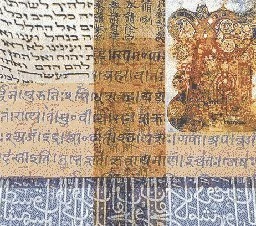
Book of Deuteronomy
Fifth book of the Torah, containing Moses' final sermons and laws.

The Book of Deuteronomy is the fifth and final book of the Torah in Judaism, where it is called Devarim, and the fifth book of the Hebrew Bible and Christian Old Testament. It consists of three sermons or speeches delivered by Moses to the Israelites on the Plains of Moab shortly before they enter the Promised Land, followed by narratives of Moses' death. One of its most significant verses is Deuteronomy 6:4, the Shema Yisrael, described as the definitive statement of Jewish identity for theistic Jews.
- field
- Religious text / Torah / Old Testament
- language
- Biblical Hebrew (Devarim); Ancient Greek (Deuteronómion); Latin (Liber Deuteronomii)
- traditional_author
- Moses (according to ancient Jewish tradition)
- modern_scholarly_dating
- 7th–5th centuries BCE
- key_verse
- Deuteronomy 6:4 (Shema Yisrael)
- oldest_section
- Chapters 12–26 (Deuteronomic Code)
Lore & Background
The book is structured as three sermons (chapters 1:1–4:43, 4:44–29:1, 29:2–30:20) followed by appendices (31:1–34:12) including the Song of Moses, the Blessing of Moses, and the death of Moses on Mount Nebo. The Ten Commandments in chapter 5 serve as a blueprint for the rest, with chapters 12–26 being an exposition of the Decalogue. The Deuteronomic Code (chapters 12–26) is considered the oldest part and the core around which the rest developed.
Reader's Guide
The Book of Deuteronomy has been central to Jewish identity, particularly through the Shema Yisrael (Deuteronomy 6:4), which Jesus also quoted in Mark 12:28–34 as the Great Commandment. Traditionally attributed to Moses, virtually all modern secular scholars and most Christian and Jewish scholars date the book to the 7th–5th centuries BCE, with its authors likely the Levite caste known as the Deuteronomist. The historical background involves the discovery of a 'book of the law' in the Temple during King Josiah's reign, believed to be the Deuteronomic Code, which then shaped a reform of worship. During the Babylonian captivity, the book was expanded into a history of Israel, and after the Exile, chapters 1–4 and 29–30 were added, making it an introductory book about a people about to return to the land. Its final verses claim that no prophet like Moses has arisen since, sealing the Deuteronomistic view of theology.
Did You Know?
- The name Deuteronomy comes from the Ancient Greek Δευτερονόμιον, meaning 'second law'.
- The book's Hebrew name, Devarim, means '[the] words [of Moses]'.
- The Shema Yisrael in Deuteronomy 6:4 is considered the definitive statement of Jewish identity for theistic Jews.
- The Deuteronomic Code (chapters 12–26) is the oldest part of the book and was likely composed in the 7th century BCE.
Frequently Asked Questions
What is the Book of Deuteronomy?
It is the fifth and final book of the Torah, serving as the closing volume of the Hebrew Bible's first section. In Christian tradition it forms part of the Old Testament, while in Jewish tradition it is known by its Hebrew name, Devarim.
Who wrote the Book of Deuteronomy?
Ancient Jewish tradition attributes the text to Moses, presenting it as his final address to the Israelite people. Modern biblical scholarship, however, generally dates its composition to the 7th through 5th centuries BCE, with chapters 12–26 regarded as the oldest layer of the book.
What is the Shema and why is it central to Deuteronomy?
The Shema Yisrael, found in Deuteronomy 6:4, is widely regarded as the defining declaration of theistic Jewish identity, affirming the oneness of God. It has served as a daily recitation and foundational creed for Jews across millennia.
How is the Book of Deuteronomy structured?
The book is organized as three major sermons delivered by Moses to the Israelites on the Plains of Moab, just before they enter the Promised Land. These speeches are followed by narrative passages that conclude with the account of Moses' death.
Why is Deuteronomy considered important in both Judaism and Christianity?
In Judaism it closes the Torah and contains the Deuteronomic Code, a foundational collection of covenant laws in chapters 12–26. In Christianity it anchors the Old Testament's legal and narrative framework and has shaped ongoing theological discussions on covenant, law, and grace.
More in Christian Sacred Texts 1-24
Elsewhere in the Christian Sacred Texts universe
Spotted an error? Know more?
This is a living reference — every entry is fact-audited, and reader corrections feed straight into our audit queue. Suggest an edit · See this site's audit record