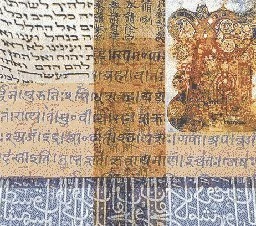
Book of Judges
Cycles of faith, failure, and deliverance in pre-monarchic Israel.

The Book of Judges is the seventh book of the Hebrew Bible and the Christian Old Testament. It covers the time between the conquest described in the Book of Joshua and the establishment of a kingdom in the Books of Samuel, during which biblical judges served as temporary leaders. The book follows a consistent pattern: the people are unfaithful to Yahweh, are delivered into the hands of enemies, repent, and are rescued by a judge, only to fall again into unfaithfulness.
- field
- Religious text / Historical chronicle
- known_for
- Cyclical pattern of apostasy, oppression, repentance, and deliverance by judges
- major_judges
- Othniel, Ehud, Deborah, Gideon, Jephthah, Samson
- minor_judges
- Shamgar, Tola, Jair, Ibzan, Elon, Abdon
- structure
- Double prologue (1:1–3:6), main body (3:7–16:31), double epilogue (17–21)
Lore & Background
The epilogue contains two appendices: Micah's Idol, describing the tribe of Dan conquering a northern territory, and the Levite's concubine, which leads to war between the Benjamites and other tribes. Despite appearing at the end, certain characters and idioms suggest these events occurred early in the period of the judges. The book concludes with the verse 'In those days there was no king in Israel,' hinting that the cycle could be broken by establishing a monarchy.
Reader's Guide
The Book of Judges is significant for its portrayal of pre-monarchic Israel as a cycle of apostasy and deliverance, reflecting Deuteronomistic theology. Most critical scholars view it as largely non-historical, though some parts, like the Song of Deborah, may preserve genuine memories. The book's structure—double prologue, main body, double epilogue—is seen by some as the work of a single editor, while others view it as a collection of fragments. The repeated phrase 'there was no king in Israel' suggests a pro-monarchy redaction, likely from Judah. Among anthropologists, the intermediate stage of chiefdom may be reflected in the judges, who acted as temporary military leaders. The historicity of the judges is debated: some scholars doubt their existence, while others, like William G. Dever, find it plausible. The book's chronology is overtly schematic and likely added later. Manuscript sources include four Dead Sea Scrolls fragments and the Aleppo Codex.
Did You Know?
- Four Dead Sea Scrolls contain parts of Judges: 1QJudg, 4QJudga, 4QJudgb, and XJudges.
- The earliest complete Hebrew copy is the Aleppo Codex from the 10th century CE.
- The only major judge described as making legal judgments is Deborah.
- The epilogue includes the story of a Levite's concubine leading to war between Israelite tribes.
Frequently Asked Questions
What is the Book of Judges?
It is the seventh book in both the Hebrew Bible and the Christian Old Testament, narrating the era between Joshua's conquest of Canaan and the rise of the monarchy. During this pre-kingship period, the Israelites were led by temporary, divinely raised figures called judges.
Who are the major judges featured in the book?
Six principal judges carry the bulk of the narrative: Othniel, Ehud, Deborah, Gideon, Jephthah, and Samson. The text also names several minor judges—Shamgar, Tola, Jair, Ibzan, Elon, and Abdon—who receive only brief mentions.
What is the repeating cycle that structures the Book of Judges?
Each major section follows the same four-beat pattern: the people abandon Yahweh, foreign oppressors subdue them, the Israelites repent and cry out, and a judge is raised to deliver them—only for the cycle to restart. This cyclical rhythm runs through the main body of the book (chapters 3–16).
How does the Book of Judges end?
Chapters 17 through 21 form a double epilogue that shifts from the judge narratives to a dark civil conflict, culminating in the near-total destruction of the tribe of Benjamin. The book closes with the memorable refrain that 'in those days there was no king in Israel,' underscoring the lawlessness of the era.
Why is the Book of Judges significant in the broader biblical story?
It bridges the conquest account of Joshua with the monarchy narratives in Samuel, showing the spiritual and political disorder that made centralized kingship feel necessary. Its repeated cycles of apostasy and rescue serve as a theological commentary on human failure, divine patience, and the limits of charismatic leadership without a king.
More in Christian Sacred Texts 1-24
Elsewhere in the Christian Sacred Texts universe
Spotted an error? Know more?
This is a living reference — every entry is fact-audited, and reader corrections feed straight into our audit queue. Suggest an edit · See this site's audit record