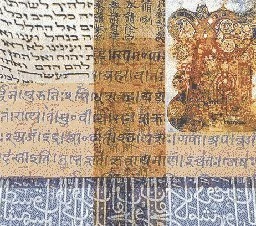
Book of Numbers
Fourth book of the Torah, detailing Israel's wilderness journey.

The Book of Numbers is the fourth book of the Hebrew Bible and the fourth of five books of the Jewish Torah. Its name derives from the two censuses taken of the Israelites, and it chronicles the Israelites' journey from Mount Sinai to the plains of Moab, emphasizing themes of holiness, faithfulness, and trust.
- field
- Religious text / Torah
- language
- Biblical Hebrew
- also_known_as
- Bemidbar (Hebrew), Arithmoi (Greek), Liber Numeri (Latin)
- key_events
- Two censuses, sending of twelve spies, rebellion and punishment, Balaam's blessing
- setting
- Mount Sinai, Kadesh-Barnea, plains of Moab
Lore & Background
The Book of Numbers begins at Mount Sinai, where the Israelites have received their laws and covenant from God. The Israelites then set out toward the Promised Land, but they complain about hardships and the authority of Moses and Aaron. Twelve spies are sent into Canaan; Joshua and Caleb report the land is abundant, but the other spies report giants, leading the Israelites to refuse entry. God condemns them to death in the wilderness for 40 years until a new generation arises.
Reader's Guide
The Book of Numbers is significant as the culmination of the exodus story, drawing to a conclusion themes introduced in Genesis and played out in Exodus and Leviticus: God's promise that the Israelites will become a great nation, have a special relationship with him, and take possession of Canaan. It demonstrates the importance of holiness, faithfulness, and trust, contrasting the disobedience of the first generation with the obedience of the second. The book also contains some of the earliest known Hebrew Bible text fragments, from the Ketef Hinnom scrolls, dated to the late seventh or early sixth century BC. Its structure is often divided by locale—Mount Sinai, Kadesh-Barnea, and the plains of Moab—or by the two generations of those condemned to die and those who will enter Canaan. The book ends with the new generation ready to cross the Jordan River.
Did You Know?
- The name 'Numbers' comes from the two censuses taken of the Israelites.
- Fragments of the Ketef Hinnom scrolls containing verses from Numbers are the earliest known artifacts of the Hebrew Bible text.
- The book ends with the new generation of Israelites in the plains of Moab ready for the crossing of the Jordan River.
Frequently Asked Questions
Why is the Book of Numbers called that?
Its title comes from the two population censuses of the Israelites recorded within it, one at the start and one near the end. The Hebrew name Bemidbar simply means 'in the wilderness,' reflecting the book's setting.
What are the major events in the Book of Numbers?
The narrative covers the two censuses, the dispatch of twelve scouts into Canaan, the resulting rebellion and divine punishment of the wandering generation, and the episode of Balaam, a non-Israelite prophet who ends up blessing rather than cursing the people.
Where does the story of Numbers take place?
The action moves through the wilderness, beginning at Mount Sinai, passing through Kadesh-Barnea, and concluding on the plains of Moab just before the Israelites cross into the Promised Land.
Who is Balaam and why is he significant in Numbers?
Balaam is a Mesopotamian prophet hired by the king of Moab to curse the Israelites, but God redirects his words so that he delivers blessings instead. His story highlights that divine purpose can override human intentions.
Why is the Book of Numbers important in the Torah?
As the fourth of the five Torah books, it bridges the law given at Sinai with the entry into Canaan, and it develops themes of communal holiness, the consequences of distrust, and the need to rely on God's promises during long periods of uncertainty.
More in Christian Sacred Texts 1-24
Elsewhere in the Christian Sacred Texts universe
Spotted an error? Know more?
This is a living reference — every entry is fact-audited, and reader corrections feed straight into our audit queue. Suggest an edit · See this site's audit record