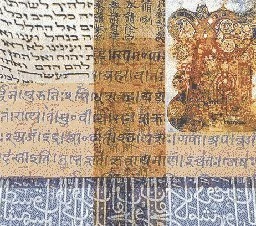
Book of Esther
Book of Esther recounts a Jewish queen's thwarting of a genocide in Persia.

The Book of Esther (Hebrew: מְגִלַּת אֶסְתֵּר, romanized: Megillat Ester) is a book in the third section (Ketuvim, "Writings") of the Hebrew Bible, one of the Five Scrolls, and later part of the Christian Old Testament. It relates the story of a Jewish woman in Persia, born as Hadassah but known as Esther, who becomes queen of Persia and thwarts a genocide of her people, leading to the establishment of the Jewish festival of Purim.
- known_for
- Central text of the Jewish festival of Purim; one of only two books in the Hebrew Bible (with Song of Songs) that do not mention God explicitly, though Ruth is also sometimes included in this list.
Lore & Background
The story begins with Queen Vashti's banishment for disobeying the king, followed by a beauty pageant in which Esther, a Jewish orphan raised by her cousin Mordecai, is chosen as the new queen. Esther conceals her Jewish identity until Mordecai discovers a plot by the king's advisor Haman to kill all Jews in the empire. Mordecai urges Esther to intervene, and after a period of fasting, she reveals her heritage to the king and exposes Haman's scheme, leading to the Jews' salvation and the hanging of Haman on the gallows he had prepared for Mordecai.
Reader's Guide
The Book of Esther holds a unique place in the Hebrew Bible as one of only two books that do not explicitly mention God, a feature that traditional Judaism interprets as demonstrating divine providence through seemingly natural events. Its central role in the festival of Purim—during which it is read aloud, charity is distributed, and food gifts are exchanged—underscores its enduring liturgical and cultural significance. The book's setting in the Achaemenid Empire, with its detailed court intrigues and reversal of fortune, has made it a subject of literary and historical analysis. Scholars debate the historical identity of Ahasuerus, with most identifying him as Xerxes I, though classical and traditional sources propose Artaxerxes I, Artaxerxes II, Artaxerxes III, or Cambyses II. The presence of Akkadian and Aramaic loanwords and parallels to Near Eastern ritual celebrations (such as eating 'Haman's ears' and masquerading) suggest possible influences from pagan festivals. The book's legacy as a story of survival and resistance continues to resonate within Jewish tradition and beyond.
Did You Know?
- The Book of Esther and Song of Songs are the only books in the Hebrew Bible that do not mention God explicitly (Ruth is also sometimes included in this list, but Ecclesiastes does mention God).
- The book has a notable number of Persian loanwords, but it does not contain more Akkadian and Aramaic loanwords than other biblical works; books like Daniel and Ezra have significantly more Aramaic content.
- Purim practices like eating 'Haman's ears' and making a racket with a ratchet have parallels in Near Eastern ritual celebrations of Ishtar.
The Nature and Purpose of Sacred Languages
A sacred language—sometimes called a lingua sacra or holy tongue—is a language maintained and employed primarily for religious purposes by communities whose everyday speech is something entirely different. Rather than serving as a tool for daily commerce or conversation, it exists to carry the weight of worship, ritual, and scriptural recitation. Several faith traditions treat the language of their foundational texts as inherently holy: Roman Catholicism reveres Ecclesiastical Latin, Judaism holds Hebrew in special regard, Islam honors Arabic, Zoroastrianism preserves Avestan, Hinduism venerates Sanskrit and Tamil, and Sanamahism uses Meitei. This stands in contrast to Buddhism and most non-Catholic Christian denominations, which generally do not attribute inherent sanctity to their liturgical tongues. The sacred language is typically the one spoken when a religion's core texts were first committed to writing, and once that association is made, the language becomes fixed, immune to the natural drift and evolution that reshapes living speech. The training of clergy in such a tongue becomes a significant cultural investment, and their command of it is perceived to grant access to a body of knowledge that untrained laypeople cannot—or should not—reach.
Linguistic Preservation and the Fear of Translation
Once a language becomes bound to religious worship, believers tend to ascribe to it a solemnity and dignity that their everyday vernacular simply does not possess. A deep anxiety surrounds the act of translation: there is a persistent fear that rendering sacred texts into a new tongue will strip away authenticity and precision, and that gaining communal acceptance for any revised version will prove extraordinarily difficult. This reverence for the original has a remarkable side effect—sacred languages tend to retain linguistic features that would otherwise be lost as languages naturally evolve. In some traditions the sacred tongue is entirely dead; in others it merely reflects an archaic stage of a still-living language. Seventeenth-century English, for instance, persists in Protestant worship through the King James Bible of 1611 and older editions of the Anglican Book of Common Prayer. In more extreme cases the gap widens until the liturgy is nearly unintelligible without dedicated study, as when the Roman Catholic rite remained in Latin long after the Council of Tours in 813 mandated preaching in local Romance or Germanic tongues, or when Old Church Slavonic became opaque to modern Slavic speakers unless they undertake formal study.
Buddhist Sacred Language Traditions
Buddhism presents a particularly layered picture of sacred language. When the Buddha's sutras were first committed to writing—likely in Pali—roughly twenty distinct schools existed, each holding its own variant. The Pali Canon we know today descends from the Tamrashatiya school, while the Chinese and Tibetan canons trace back to the Sarvastivada tradition, originally composed in Sanskrit. Theravada Buddhism centers on Pali, derived from Sanskrit, and in Thailand and Myanmar the language is transliterated into local scripts, producing distinctly Thai or Burmese pronunciations. Mahayana Buddhism, now a small minority in South Asia, largely abandons Sanskrit in favor of local tongues, with Classical Chinese dominating in East Asia and Japanese readings of Chinese characters in Japan. In Vajrayana, Classical Tibetan serves as the primary study language, yet Sanskrit mantras are preserved within deity yoga practices. Notably, many Sanskrit Buddhist texts survive only because they were carried to Tibet, with unknown ancient copies surfacing there as recently as 2003. In Nepal, Newar Buddhism guards ancient Sanskrit texts found nowhere else, and tantric compositions are often written in deliberately obscure twilight language requiring a qualified teacher's oral explanation to unlock their meaning.
Christian Sacred Language Traditions
Christian worship does not revolve around a single sacred tongue. Instead, most churches tracing their lineage to the Apostles continue employing the standard languages of the first few centuries of the common era. Many denominations draw a careful distinction among a sacred language, a liturgical language, and a vernacular. The three most consequential languages of the early Christian world were Latin, Greek, and Syriac, a dialect of Aramaic. The Gospel of John records that the inscription identifying Jesus as King of the Jews was placed on the cross in three languages, thereby sanctifying them as the first tongues to proclaim his divinity. Greek, the original language of the New Testament and the Septuagint, served as the lingua franca across much of the Levant. Hebrew, the dominant language of the Old Testament, was the common speech of most Jews in the region. Latin, the tongue of the Roman Empire, quickly became a vital vehicle for Christian expression. This multilingual foundation means that, unlike traditions anchored to a single sacred tongue, Christianity carries a plural heritage of liturgical languages, each rooted in a different cultural and geographic context.
Frequently Asked Questions
What is the Book of Esther?
It is a narrative in the Writings section of the Hebrew Bible (and the Christian Old Testament) that follows a Jewish woman, Hadassah, who becomes queen of Persia and saves her people from a planned extermination. It is also one of the Five Scrolls read in Jewish liturgical tradition.
What is the main story of the Book of Esther?
A Jewish orphan rises to the Persian throne as queen Esther, then exposes the prime minister Haman's plot to annihilate every Jew in the empire. Her bold intervention before the king leads to Haman's execution and the survival of her people.
Why is the Book of Esther important in the Christian canon?
It is preserved in the Christian Old Testament as a story of providential deliverance for a vulnerable community, even though God is never named directly in its pages. It also supplies the scriptural foundation for the Jewish festival of Purim, which many Christians encounter through Jewish friends or scholarly study.
What festival is connected to the Book of Esther?
Purim is the celebration that grew directly out of the events in the scroll, marking the Jews' escape from Haman's genocide plot. The entire text is read aloud in synagogues during that holiday.
What makes the Book of Esther unusual compared to other biblical books?
It is one of only two books in the Hebrew Bible (alongside Song of Songs) that never explicitly mentions God by name. Readers typically interpret the story as an example of divine providence operating behind the scenes rather than through direct, named intervention.
More in Christian Sacred Texts 25-28
Elsewhere in the Christian Sacred Texts universe
Spotted an error? Know more?
This is a living reference — every entry is fact-audited, and reader corrections feed straight into our audit queue. Suggest an edit · See this site's audit record