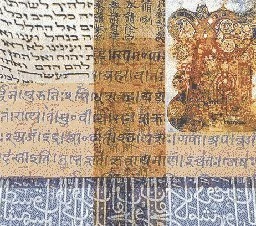
Book of Psalms
Anthology of Hebrew hymns, central to Jewish and Christian liturgy.

The Book of Psalms, also known as the Psalter, is an anthology of Hebrew religious hymns and the first book of the third section of the Tanakh (Ketuvim) and a book of the Old Testament. Its English title derives from the Greek word psalmoi, meaning 'instrumental music,' while its Hebrew name, Tehillim, means 'praises.'
- Number of psalms (Eastern Christian)
- several more
- Sections
- 5
- Primary types (per Gunkel)
- Hymns, communal laments, royal psalms, individual laments, individual thanksgiving psalms
- Attributed authors
- David, Asaph, sons of Korah, Moses, Solomon, Ethan the Ezrahite, Heman the Ezrahite
- Language of original title
- Hebrew (Tehillim)
Lore & Background
Hermann Gunkel's form-critical work divided the psalms into five primary types: hymns, communal laments, royal psalms, individual laments, and individual thanksgiving psalms. He also recognized minor types including communal thanksgiving psalms and wisdom psalms. The loss of original poetic form in some psalms is attributed to liturgical practices, neglect by copyists, or other causes.
Reader's Guide
The Book of Psalms holds profound significance as a foundational text in both Jewish and Christian traditions, serving as the hymnbook of the Second Temple and a core component of liturgical worship. The five-fold division mirrors the Torah, emphasizing its canonical importance. The superscriptions, though historically disputed, link the psalms to key biblical figures, particularly King David, and provide musical and liturgical context. The numbering discrepancies between Hebrew and Greek manuscripts reflect the text's complex transmission history, with the Dead Sea Scrolls and Septuagint evidence indicating that the collection was not finalized until the 1st century CE. Gunkel's genre analysis—identifying hymns, laments, royal psalms, and thanksgivings—has shaped modern understanding of the psalms' original settings and functions. The Psalms continue to be used in prayer, music, and study across denominations, their poetic language and theological themes resonating across millennia.
Did You Know?
- The English title 'Psalms' comes from the Greek word psalmoi, meaning 'instrumental music.'
- The Hebrew name Tehillim means 'praises.'
Frequently Asked Questions
What role does the Book of Psalms play in worship?
The Psalter serves as a cornerstone of liturgy in both Jewish and Christian traditions, supplying prayers, hymns, laments, and thanksgiving songs for communal and personal devotion. Its poems are broadly grouped into categories such as hymns, royal psalms, individual laments, and communal prayers.
Who is credited with writing the Psalms?
Various psalms carry superscriptions attributing them to figures such as King David, Asaph, the sons of Korah, Moses, Solomon, and the Ezrahites Ethan and Heman. David is by far the most frequently named author, which is why the collection is often colloquially called the Psalms of David.
Why is the Book of Psalms considered so important?
It is one of the most widely read and memorized books in both the Hebrew Bible and the Christian Scriptures, shaping centuries of worship, prayer, and theological reflection. Its range of human emotion—joy, grief, praise, and petition—makes it a foundational text for personal and communal faith across multiple traditions.
More in Christian Sacred Texts 1-24
Elsewhere in the Christian Sacred Texts universe
Spotted an error? Know more?
This is a living reference — every entry is fact-audited, and reader corrections feed straight into our audit queue. Suggest an edit · See this site's audit record